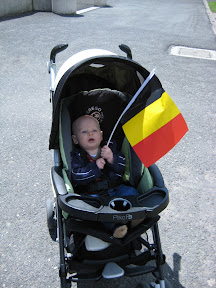
To honor our National Anthem this July we made it a point to visit lots of places with ramparts. While Old Glory wasn't ever gallantly streaming we still enjoyed watching o'er the ramparts. Being overseas makes us appreciate the United States more than you could understand- unless you have lived overseas. The trick is not to let working for the government spoil the added appreciation.
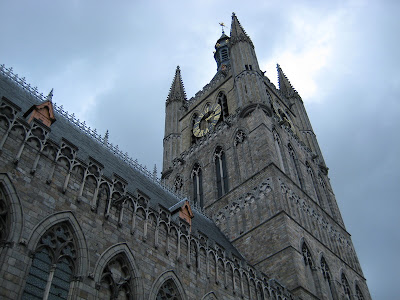 So we filled July with lots of day / overnight trips. We went to Flanders fields in Ypres first. Flanders is the northern part of Belgium and the famous WWI poem by John McCrae was written there. (We've included the poem below because it is a beautiful piece… and yes, red and orange poppies really do grow wild all over Belgium.) Ypres hosted one of the bloodiest fronts during "The Great War." The British, with the help of various other nations, withstood the Germans in Ypres and kept them from advancing to England. Both sides lost a total of around 500,000 men only to advance the front 8 miles (in favor of the British of course). The town of Ypres pretty much got flattened by the Germans so everything in the town is rebuilt. There are memorials and gravesites everywhere. We even found an F. Biddulph on one of the memorial walls.
It is often said that the United States saved Europe's bacon in both World Wars but by the time the United States decided to join the trench warfare, the British and their allies had beat the Germans down enough for the U.S. addition to tip them over the top. There is a great museum in Ypres – one of the eeriest parts is an exhibit of gas masks – World War I marked the beginning of chemical warfare. Also, the museum played recordings of air raid sirens and falling bombs. James hated that part. It was a very interesting afternoon but also quite somber to consider the many lives lost in the defense of freedom.
Bimmy wanted to include this poem
In Flanders Fields
In Flanders fields the poppies blow
Between the crosses, row on row,
That mark our place; and in the sky
The larks, still bravely singing, fly
Scarce heard amid the guns below.
We are the dead. Short days ago
We lived, felt dawn, saw sunset glow,
Loved, and were loved, and now we lie
In Flanders fields.
Take up our quarrel with the foe:
To you from failing hands we throw
The torch; be yours to hold it high.
If ye break faith with us who die
We shall not sleep, though poppies grow
In Flanders fields.
—John McCrae
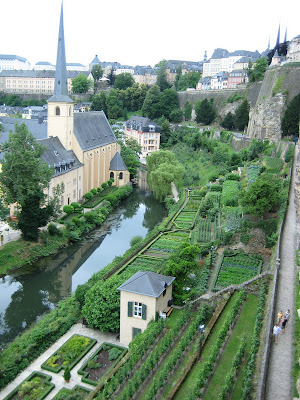 To celebrate the 4th of July we enjoyed a traditional barbeque with our neighbors and then drove to Luxembourg the next day. Luxembourg City is built on the ruins of a great fortress. The fortress was built on top of and around the high, stony "Bock promontory". The Bock Casemates are a series of tunnels, rooms, and underground defensive passageways which were carved directly into the rock. The casemates expanded the fortifications and useable space of the fortress and grew to a 14 mile-long network by 1644, with some passages as deep as 131 feet. This earned Luxemburg the title of "Gibraltar of the North". Only a fraction of the tunnels remain open, but it is a fun place to explore. We hiked around the part of the casemates that were reported to be more baby-friendly. Otherwise we would have scraped off what little hair Buster has on the roof of the caves. While walking around Luxembourg City we found it to be one of the cleanest cities that we've visited so far in Europe. General Patton is buried just outside of Luxembourg City but unfortunately, we didn't have time to visit the cemetery. In keeping with our theme for the month, it is important to note that remaining portions of the Luxembourg fortress feature lots of ramparts.
The next day we visited the Ardennes region of Luxembourg which is also called the Valley of the Seven Castles. We visited two (which were reported to be the coolest) of the seven – it's a young boy's medieval paradise. The area is beautiful with lots of hills and streams and is very green. This area is near the site of the Battle of the Bulge.>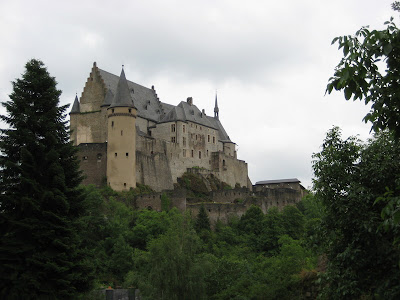
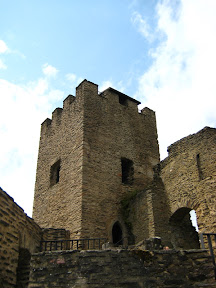 The Grand Duke of Luxembourg restored Vianden, the first castle we visited. We thought it was pretty cool – with suits of armor, a bedroom with large, very old tapestries and of course ramparts. The next castle we visited, Bourscheid, hasn't been restored and sat mostly in ruins. They have restored the tower portion, complete with ramparts, so that folks can get a good view of the area. James enjoyed all the castles and was a great sport during our wanderings.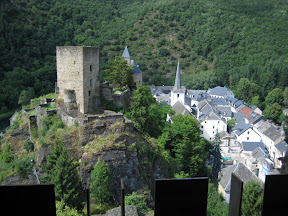
We finished our journey with a visit to a quaint little town called Esch-sur-Sure which means "the town of Esch on the river Sure" but the pronunciation of the name reminds us a lot of Bob Loblaw (one of our favorite characters on Arrested Development- see Bob Loblaw's Law Blog).
Lastly, to support the troops Gary Sinise formed a band called The Lieutenant Dan Band. During July, he visited NATO and Jay got his Forest Gump DVD autographed ("To Buster") and posed for a picture with him. You'll notice that it's a bit Gumpesque in that it looks like Jay snuck into the picture.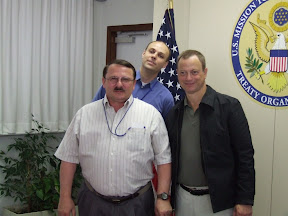 You'll be glad to know that Gary Sinise is a pretty cool guy and travels the world to play for the troops so he can do his part to support them. We're pretty sure that meeting him is way cooler than going backstage to meet the gassy old farts from Air Supply – Roo?


No comments:
Post a Comment